A post about Black representation in bicycling ads…

…and then I talk about gay politics in hip hop. ((I am desperately trying to keep this blog focused on my dissertation, but sometimes I need this space to share something else…))

First: Thank you Surly for your awesome ad! 

A few days ago, a woman posted this Surly ad on a feminist bike forum. She found it, as I did, in the 2012 winter issue of Bust.

surly ad

Surly is a Minnesota-based bicycle company that makes sturdy bikes for taking long bike trips, commuting, and winter biking. This ad features one of their “fat tire” bikes that make it really easy to bike in the snow (So I have been told). These bikes, though, run at least $2,000. Overall, this company makes excellent bikes and is a highly respected company not only in the bike business but also around the Twin Cities.

Surly maintains its reputation here because this advertisement is amazing!!!–especially considering its place in an otherwise sexist, racist, and classist industry.

Why it is amazing:

1. It features a person of color! Do you know how many bicycle ads feature people of color? Well I do not know either because I do not enjoy counting ads, but I can tell you it is not very many. People of color are severely underrepresented in every facet of bicycle culture—from bike shop employees to sitting on boards determining new bicycle infrastructure. And then people ask, “why do not we see more people of color bike!?” Huh.

2. It features a gender neutral person! Is this a man or woman? Who cares! They love to bike! And whoever it is, they are not sexualized. This is important because this ad ran in Bust—a feminist pop culture magazine, with a mostly woman-identified audience. So we could assume this person is a woman, as it would be kind of pointless to have yet another bicycle ad with a cisgender man featured—especially in a feminist magazine. Women are overly sexualized in the bicycle world—a world in which you would think that sexualizing women would be kind of, I do not know, stupid?! But no, it happens. A lot. (So much so, that a bicycle advocate created the Bike Test to check for sexist representations)

So thank you Surly for not sexualizing this person!

3. This otherwise marginalized body is biking in the winter! A lot of coverage of bicycle commuting, especially in the winter, loves to feature white dudes. Do you have a beard? Oh you certainly will be featured because your icy beard is just so silly! So it is great of Surly show that anyone can bicycle in the winter. Of course my only critique is that this bike is that it is hella expensive and a bike that only the seasoned commuter would consider buying. Most of the people I see riding this bike in Minneapolis (I’d assume the top place to spot this thing) are white people, mostly men.

4. They ran an advertisement in Bust! Supporting feminist publications is perhaps one of the few political things advertisers can do. Righteous.

If you would like to let Surly know how much you appreciate this progressive, positive, kick ass ad you can drop them a note here: derby@surlybikes.com

Of course, we can think about how sad it is that a bicycle company is celebrated for putting a non-sexualized, person of color in its advertising, somewhat hiding in a feminist magazine. We should be way pass this because it is—oh look at that—almost 2013. But, you know, baby steps.

And now, to go off topic from my dissertation:

We need a Black, gay, mainstream hip hop artist if shit is going to change.

This semester I had pointed and exceptional conversations with my students about gay marriage. I teach in Minnesota where voters in November declined an amendment that would have banned gay marriage in our state.

In light of our class discussions, one of my students sent me Macklemore’s “Same Love” video. I screened it in class. I had never heard of Macklemore and when I asked my students if they knew of him, they all looked at me incredulously. “Of course we know him, duh, Melody” they said, although it came out as grumbles at 8: 15 am.

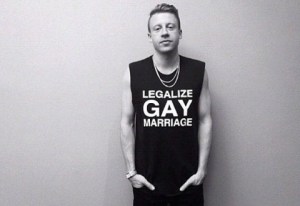
The video features a person of color who is struggling with his sexuality. The song’s message is one of equality and love and Macklemore raps such biting commentary as, “if I was gay, I would think hip hop hates me.” Someone said it, finally. To be pro-gay rights in the hip hop world runs the risk of career suicide and I was both surprised and happy to know that he was popular among my students.

And then I found out he was white.
macklemore

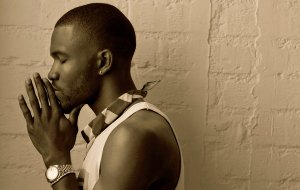
During our class discussion about “Same Love,” I asked the class if they knew who Frank Ocean was. “Yes, of course we do, Melody.” (Gawd, I am, like, so old!) Frank Ocean, a Black hip hop artist and producer, made headlines earlier this year with a tumblr post about his unrequited love for another man. His album, Channel Orange, was released the same week. And to my shock, he chose to perform “Bad Religion” on his first televised appearance—a track that is most explicit about his love for another man: “I can never make him love me, never make him love me.”  Other songs on the album discuss his lust and love for women.

Ocean refuses to identify himself as anything, sexually. When GQ asked him if he was bisexual, he responded in part: “I’m giving you my experiences. But just take what I give you. You ain’t got to pry beyond that. I’m giving you what I feel like you can feel. The other shit, you can’t feel. You can’t feel a box. You can’t feel a label. Don’t get caught up in that shit. There’s so much something in life. Don’t get caught up in the nothing. That shit is nothing, you know? It’s nothing. Vanish the fear.”
fo

I asked my students if Frank Ocean was respected in their peer groups, even though he is a person of color, hip hop artist who lusts over and loves other men. A woman of color told the class that her female friends love Frank Ocean but not her male friends. A football player told the class that when someone put Frank Ocean’s album on in the practice room, it got shut off immediately because, yuck, he loves men.

Frank Ocean’s sexual identity is complicated, as most people’s sexuality is, but he is not entirely threatening in that he still loves women and he refuses to identity as queer. He has no obligation to identity as anything, but the lack of connection to queerness allows listeners to grasp on to his heterosexualness.

So what we have is: a straight, white rapper highly respected for supporting gay rights and a Black artist who is partially shunned by an audience who would otherwise love his music (for one, his album is critically acclaimed). Both artists have impressive albums in that they never result to objectifying women–a huge feat in hip hop. They also make really smart music. Macklemore, although not from Minneapolis, finds great success in the city because of our local hip hop scene filled with intelligent, political artists (Dessa, Atmosphere, Brother Ali).

I think there is a reason Macklemore does not run into more trouble: he is a straight, white, handsome man. Young, straight, white people are hugely supportive of gay rights. In fact, this demographic has been credited with turning the public opinion tide (and resulting election results) about gay marriage. Macklemore’s support of gay marriage is normalized through his race and sexuality. He has laid important groundwork in an industry that still refuses to accept gay people—especially gay men of color. But he gets to do this because of his white privilege.

Frank Ocean struggles more. His queerness makes people really uncomfortable. It does not mesh with our visions of hip hop. Black people are the ones dropping the f-word all the time, so why is he suggesting that he is a f-word?

As I listened to “Same Love” last night, I filled with rage and sadness and I thought to myself, “we need a Black gay hip hop artist…now.”

I believe that if we are going to banish the homophobia and hatred embedded in mainstream hip hop, then we need a role model. Somebody has to come out. Be normatively gay, that is fine. But be gay. And rap about it. And embody it. Because otherwise, Macklemore’s insights about the homophobic hip hip industry are going to continue. The youth are undeniably supportive of gay people and it is now or never that we capitalize on that. Frank Ocean is helping, Macklemore is helping. But we need to drop a serious bomb on the industry before the hate-filled ideology digs its nails even deeper into a music genre that has so much potential to change.

“Man, that’s gay” gets dropped on the daily. We become so numb to what we’re saying. A culture founded from oppression. Yet we don’t have acceptance for ‘em. Call each other faggots behind the keys of a message board. A word rooted in hate, yet our genre still ignores it. –Mackelmore “Same Love”

Bike justice

Fellow bike scholar, Adonia Lugo, just launched the “Seattle Bike Justice Project” website. Not only does it push an emerging critique of bicycle advocacy, she is also engaging in feminist research ethics by making her ethnographic research available to the public.

From the site: “Bike justice” means questioning the idea that bicycling is a luxury for a privileged group, or a burden for a marginalized group. It brings the equity struggle of other social justice movements to bike advocacy. It investigates the bicycle’s role in building sustainable communities and celebrates the diverse uses and users of bicycles! This website is a resource for people who want to find out how bicycling is perceived by community activists outside of bike culture.

Check it out here: http://seattlebikejustice.com/

Interview with Minneapolis Mayor R.T. Rybak

On May 30, 2012 I spoke with Minneapolis Mayor R.T. Rybak about the city’s incentive to build bicycle infrastructure.We also discussed our local bike share program, Nice Ride, and the criticism of the system’s initial placement in richer and whiter areas of town. I did this interview for my dissertation chapter titled “Bike lanes are white lanes: The neoliberal reproduction of whiteness in cycling-based urban improvement.”

Melody: My big question is what the city’s incentive or your incentive is to build bicycle infrastructure?

Mayor R.T. Rybak: Let me go to the macro. One specific point I just want to make while I have it fresh in my head because I think it relates to how advocacy plays a role. Couple years ago in my budget I put in a bike coordinator and immediately the conservative talk radio and blogosphere really started focusing on this goofy mayor of Minneapolis with his bike coordinator. And emails and letters from all over started coming into City Hall. That could’ve been the end of the story. But it wasn’t because of the advocacy infrastructure here. I turned to our bike advocates and said unless we get a counter offensive some of my council members are gonna go the wrong way on this. And they swooped into action. Within a couple days our council members were getting many more supportive emails about why this was important for public safety, attracting people like you from other communities to bike culture. And we won that battle. And it’s one example of how a political leader can want to do something but you are dramatically more empowered if there is an advocacy community behind it. But going back to your point is really like how this all happened or?

Melody: What’s the incentive? Especially when you are talking about attracting people

Rybak: Sure. It’s completely clear to me that we’re in a midst of a total revolution in the way we get around. Most public governments haven’t quite gotten anywhere nearly where the public is at on this. We [the city government] have, so. I recognize that congestion is up, global warming, gas prices, all add to the fact that we’re reinventing the American city that’s going to be much more pedestrian and bike-oriented. No use debating it anymore, get used to it, it’s real. So to us, we have a huge head start on most other cities. On almost any other city. Because we recognize that the bike is a key part of our transportation infrastructure. So the incentive in it is it creates kind of a street culture we want that isn’t just car dominated. It creates a more active population. It plays to our image of a place that doesn’t get slowed down by winter; we simply deal with it. And it reflects the green values of my constituents. So those are the few of the things. In the short run it is more expensive than the long run it’s dramatically less expensive. A separate point and its important and again it’s about you coming here in the bike culture. The key to economic growth is attracting talent. Especially in the creative field, talent is very mobile. Our very public bike culture has been an enormous asset in attracting talented people here. Not just in the bike fields but in advertising, in financial services, the arts, politics, whatever. It’s attracted this wide swath of people to get something they can’t find in a freeway-oriented place like Houston. Even in a city with a great reputation like Austin, for attracting cutting edge talent, they are not even in the same league as Minneapolis on bike culture. That gives us a huge competitive advantage. I personally love riding my bike but it’s more about what kind of city we want, you know.

Melody: I was actually just curious what your thoughts were on the economic reasons so I’m glad you brought that up

Rybak: One of things very important in the last few years that we’ve done a great job in is maximizing the assets for very intensively bike-orientated folks who will bike twelve months a year in our climate. We needed a break through strategy to get at people who were kinda interested in hopping on a bike but wouldn’t necessarily buy a super expensive one, use it all the time, have the rack on the car, shower at the office, or all the other things that a more intense bike rider would use. That’s where bike sharing came in. So because of my active interest in bikes and because of what our city was I was flooded with feedback when bike sharing started to take off in Europe. Paris did it, oh gee we should launch a bike share thing in Minneapolis. I thought, great idea. But no one’s even done this in the U.S. and when the Republican convention was here, Humana came in saying they love this bike share thing and they want to set one up in the Republican convention and the Democrat convention. I said, this is my chance. So we used the fact that Humana came in and temporarily set it up to show sponsors what we were talking about. And then I put a team on to investigate. The team came back saying the good news is we think this can work even though it really isn’t working in other American city right now. The bad news it’s gonna cost a lot of money. Two and a half million dollars to kick off, which we did not have. So one of the groups that I brought in, to show the whole bike system, was Blue Cross. And I said for us to make this work we are gonna ask you for a million dollars, which was a huge request. And we made the case and I told them it would be one of the best branding moves they ever made. And remarkably they came through with the million dollars which allowed us to leverage the one and a half million in a federal grant so we now had two and a half million of the three million we needed and we were on our way. So this great group of folks we had advising us on this showed us that the best system to pick was Dixie out of Montreal. And we launched. I was very nervous for a few months because I could have been a three million dollar idiot promoting this thing with green bikes that sat vacant all over town. That wasn’t the case. It exploded. Blue Cross did get one of the marketing things they ever did. In fact they have a television commercial they run bragging that they sponsored it, which is great. They put more money into expanding into St Paul. We got a special grant about health disparity to go into North Minneapolis in a very intensive way. That’s an example of how all of this has had a huge ability to break through to a whole new type of bike rider. So I use that for instance in rush hour when I’m trying to get from side of town to another, in my suit. People who may want to ride a bike from their place in Uptown, downtown and then meet a friend after work and take the bus home. Don’t have tie all around where their bike is so it’s just to work.

Melody: It’s interesting you brought up Nice Ride because to ask a critical question

Rybak: Please

Melody: I was here when you launched Nice Ride, a lot of criticism was where it was placed initially so the issue of well now that’s gonna be seen as another thing that white people like again.

Rybak: Right

Melody: I know you know about the criticism, you got rid of the credit card thing, so what is your response to that criticism that it wasn’t in North right away?

Rybak: First, we went where our accounts knew there was the most people biking. Knowing that that was the place we could succeed the most we also knew we had to quickly come up with a strategy to address affordability and location so we weren’t perpetuating the gaps in the system. So we immediately began working on grants strategies that would allow us to take more risks to put racks that may not be used as much in locations where it wasn’t as much of a bike culture. That’s where all the North Minneapolis ones came from. Then we worked a lot with the insurance folks about what they required because they anticipated so many bikes would be stolen.

Melody: But none did.

Rybak: Zero. So boom we were able to lower that. We knew the problems from the start. We knew that we should launch and have success and have the parts that would most likely to be successful carry the rest of the system and in fact they have. And that was able to leverage grants in North Minneapolis, St. Paul. Our strategy into St. Paul was also focused disproportionately on the central corridor because of the construction challenges and you know the leaders in St. Paul were very reluctant at first. I was all about it. They were very reluctant but once it took off they got interested and so was Blue Cross

Melody: So you haven’t seen it go up in North Minneapolis with any problems getting people on bikes?

Rybak: No it’s working really well, so. It’s not working with the same intensity of some of the parts of town that have more bike culture. That will take a while. We’re fine with that.

Melody: So there’s not this fear that the stereotype of it being for white bicyclists, it doesn’t seem to be a problem?

Rybak: No, we’ve done some things that are intentional about getting bike facilities and paths into areas that aren’t traditionally bike culture. Midtown Greenway is the most visible but the Nice Ride stations in North Minneapolis is another one. Another small program I liked a lot we gave environmental grants a few years back, one of which went to a program that taught Somali women to bike which I just loved. And bike cops for kids where if they get caught wearing a helmet they can win a bike. Series of things like that. The bike center in North Minneapolis.

Melody: Venture North?

Rybak: Yeah. Also, 35th and Chicago. Right next to Pilsbury. [Full Cycle]

Melody: Ok cool, I think that’s actually it unless you want to say what the future holds for you for bicycle infrastructure, a dream plan

Rybak: Yeah, there’s not another city that has better off-road bike trails. Portland and Washington and New York I think have done an outstanding job of on-street. In fact a better job of visual markings than we have. So we’ve really tried to push that envelope more. The Holy Grail here is take existing infrastructure and win back roads with complete straight strategy. Most cities can’t afford what we have done, or we were blessed with this amazing park system. And so we, I believe, need to catch up to these other cities you know innovating on existing streets and winning back the fact that the street does not belong to the car. And has to be shared, get used to it.

Mayor R.T. Rybak on a Nice Ride bicycle (image credit: Star Tribune/Elizabeth Flores)

[Mere minutes after I finished talking to Rybak, Occupy Homes activists stormed his office demanding answers to why Rybak keeps ordering police to evict Occupy activists from foreclosed homes]

My favorite intersection in Portland, OR

Hello from Portland, Oregon! I am currently in town working an odd job and trying to squeeze in some research about bike lanes and gentrified communities. I am drawn to Portland due to a recent community uproar over a proposed bicycle lane improvement plan in North Portland. There is ample coverage of this via Bike Portland: http://bikeportland.org/tag/williams-avenue-bikeway-project

Funny enough, I am sitting in a cafe mere feet from the bike lane that has caused a serious discussion about racism and classism rooted in bicycle infrastructure planning.

The community debate about what an improved bike lane represents in North Portland rests on a recent history of hyper-gentrification in the area. The house I am staying at in Portland is a few blocks from the intersection of Fremont and 15th Ave. I am completely fascinated with this intersection due to its glaring juxtaposition between the “old” and “new” North Portland. Have a look!

Helmets, Melody

This slideshow requires JavaScript.

Link

Bike Lanes are White Lanes

In the spirit of the “invisible cyclist” blog, I wanted to post a  link to my “old” blog where I started to think about this concept. Please check it out. It is simple thinking, soon to be drowned out by nuanced academic speak. So get it while you can. 

Helmets, M.